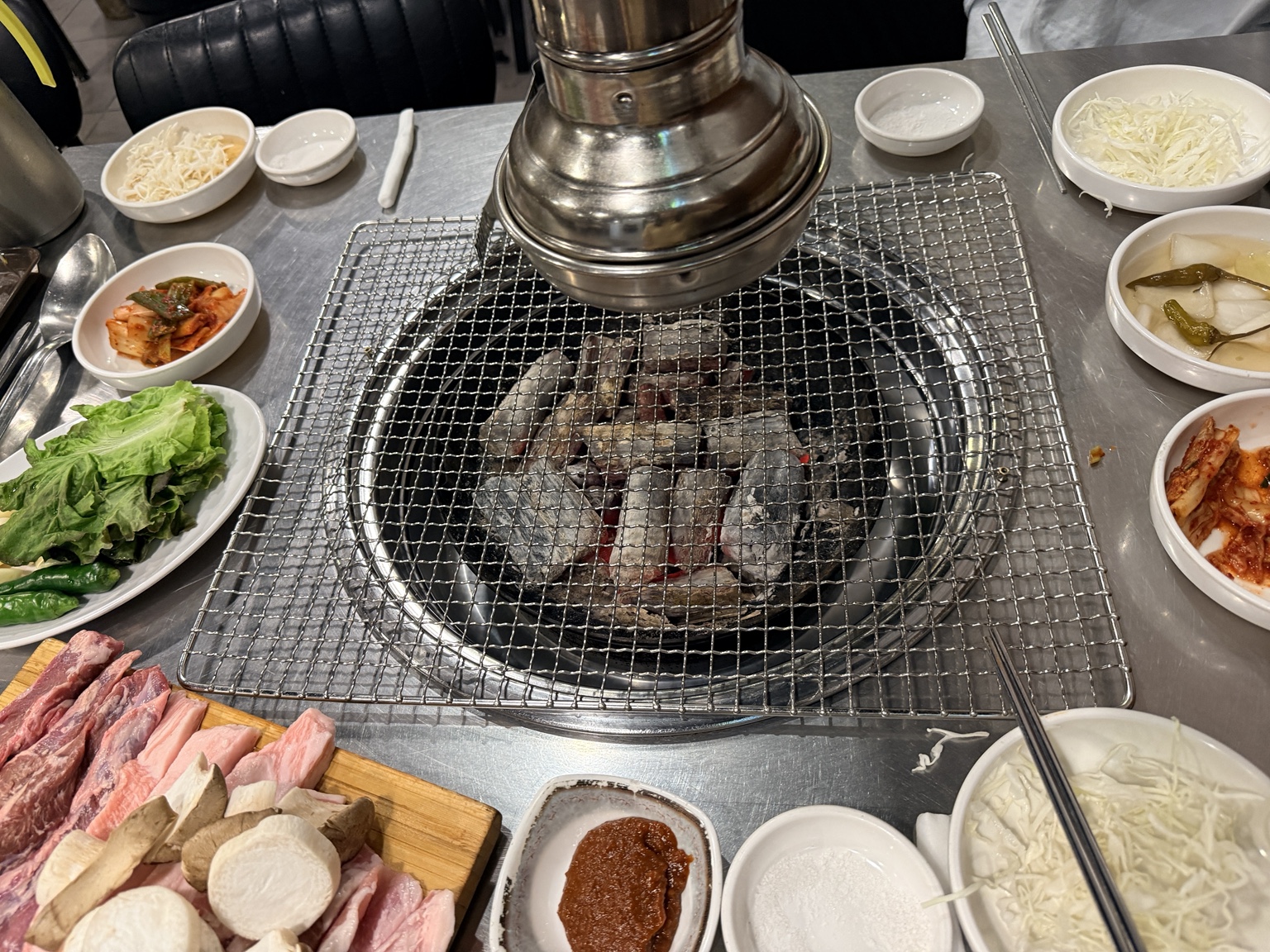
On a Friday after 8 p.m., I went to Handoni Sindang with a group of more than five friends. We had no reservation, but we were seated immediately. It was the kind of dinner where the table kept filling with pork, the charcoal stayed busy, and we ordered more meat several times.
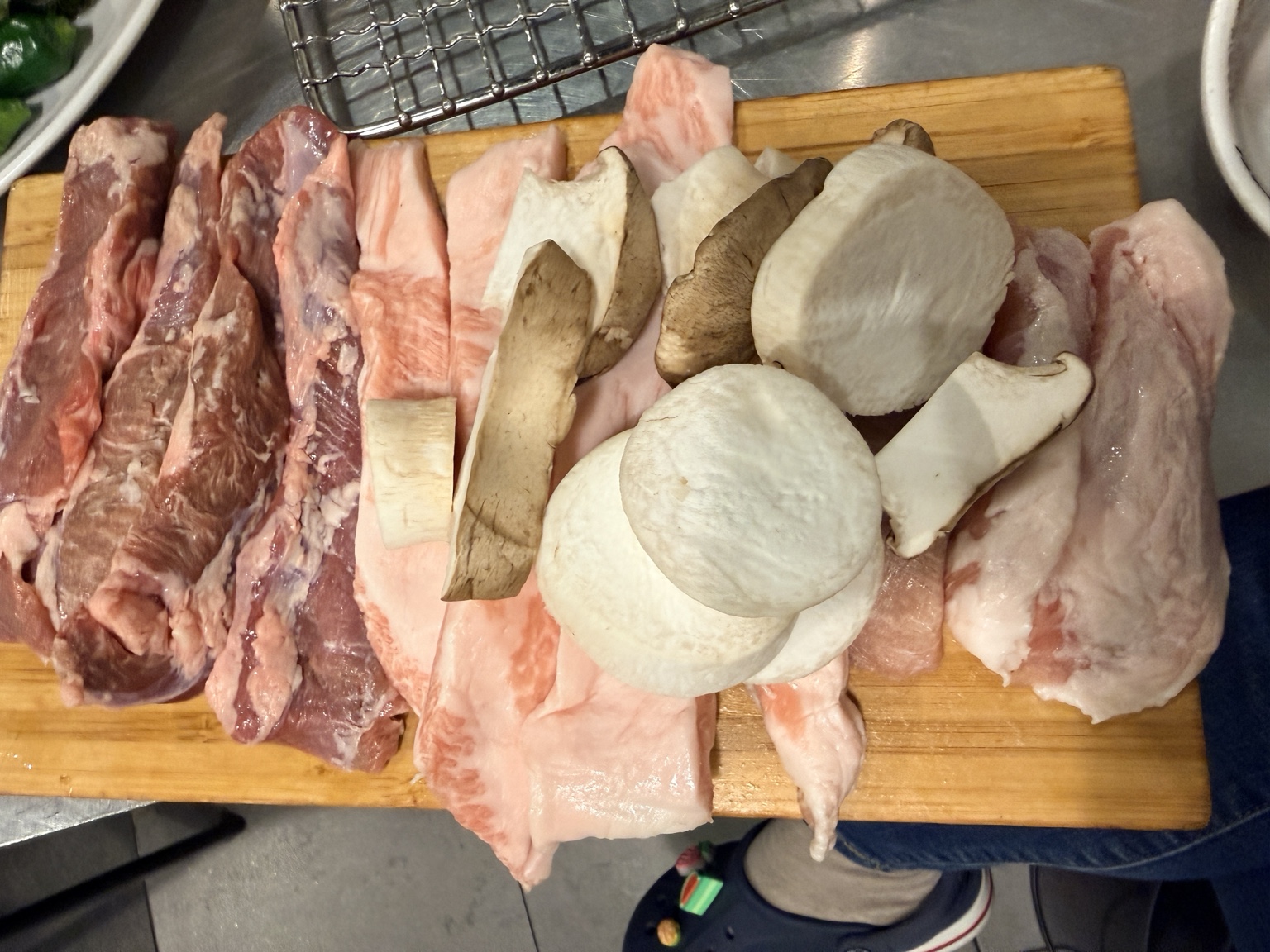
We grilled everything ourselves: thick hangjeongsal, leaner galmaegisal, king oyster mushrooms and garlic. Then we finished with a bubbling pot of cheonggukjang. Handoni is still the first place I think of when I want hangjeongsal.
Handoni Sindang: quick facts
- Restaurant: Handoni Sindang (한도니 신당점)
- Address: 244 Dasan-ro, Jung-gu, Seoul
- Nearest subway: Sindang Station, near Exit 6
- Hours: Listed as open 24 hours when checked; verify the latest hours before visiting
- Our visit: Friday after 8 p.m., more than five people
- Reservation and wait: No reservation; we were seated immediately
- Grilling: We cooked the pork ourselves over charcoal
Map: Open Handoni Sindang in Google Maps
Last checked: September 10, 2026. Hours, prices and service can change, so confirm the latest listing before your visit.
Here is the part that says everything: we did not order one round of pork and stop. The boards kept emptying, and another order followed. Then another.
What is hangjeongsal?
Hangjeongsal (항정살), pronounced roughly hang-jeong-sal, is a well-marbled pork cut from around the neck and jowl area. English menus often call it pork jowl, although butchery terms do not match perfectly from country to country.
It is not the same as samgyeopsal. Pork belly has broad, visible layers of meat and fat. Hangjeongsal has finer streaks of fat running through the meat, which gives it a springier bite. When it is grilled well, the edges brown and turn slightly crisp while the center stays juicy.
If you like the richness of pork belly but want more texture, hangjeongsal is an easy next Korean BBQ cut to try.
What we ordered and the menu prices
The menu prices listed online when I rechecked them on September 10, 2026 were:
- Hangjeongsal: ₩19,000
- Tong-galmaegisal: ₩17,000
- Cheonggukjang: ₩6,000
We reordered the pork several times, but I did not record the exact number of servings or our final bill. I am leaving that out rather than guessing.
For a first visit, I would start with hangjeongsal, add galmaegisal for contrast, and keep cheonggukjang for the end. The cuts do not eat the same way, which makes the meal much more interesting than ordering only one type of pork.
The hangjeongsal: thick, juicy and smoky
The hangjeongsal was the reason I came, and it was also the reason I kept eating. The pieces were thick, with enough marbling to stay juicy over the charcoal. Once the cut sides had browned, the smoky aroma became much more noticeable.
This is where I would slow down for one bite. Try the first piece with only a little salt. It is the easiest way to notice the charcoal and the meat’s springy texture before adding ssamjang, garlic or a lettuce wrap.
At many Korean BBQ meals, diners alternate between plain bites and ssam: meat wrapped in lettuce with ssamjang and garlic. There is no one correct sequence. Start plain, then build the bite you like.
What is galmaegisal?
Galmaegisal (갈매기살) is a leaner pork cut from around the diaphragm area, sometimes translated as pork skirt meat. Despite the Korean name, it has nothing to do with seagulls—the word galmaegi also means seagull, which can confuse first-time visitors.
Compared with hangjeongsal, our galmaegisal tasted meatier and less fatty. Alternating between them kept the meal from becoming too rich: juicy hangjeongsal first, then a firmer, leaner piece of galmaegisal.
How we grilled the pork
During our visit, Handoni was self-grill. We placed the thick pieces over the charcoal, waited for the surfaces to color, then cut them into bite-size pieces. Turning the newly cut sides toward the heat created more browned edges.
Fat can cause sudden flames over charcoal, especially with hangjeongsal. Move the pork away from flare-ups and cook it through. We also grilled garlic and king oyster mushrooms beside the meat.
If you are unsure whether staff will grill for you, ask when you sit down. Service styles can change by restaurant, shift or visit.
Then came the cheonggukjang
Cheonggukjang (청국장) is a Korean stew made with quickly fermented soybeans. It is related to doenjang-jjigae, but the aroma is usually stronger, and whole or partly crushed beans may still be visible. If natto or other strongly fermented foods are new to you, the smell may be the biggest surprise.
At Handoni, the flavor was deep and savory, with plenty of beans and solid ingredients. After several rounds of rich pork, the hot stew changed the rhythm of the meal completely. It did not feel like a side note; it felt like the proper ending.
Foreign visitors, do not judge this one by aroma alone. Take a small spoonful with rice if rice is on your table, then decide. The smell can be bold even when the flavor is warm, earthy and comforting. For more background, Maangchi has a useful guide to cheonggukjang.
Useful Korean phrases for ordering
- 항정살 1인분 주세요.
Hangjeongsal il-inbun juseyo.
One serving of hangjeongsal, please. - 갈매기살 하나 더 주세요.
Galmaegisal hana deo juseyo.
One more order of galmaegisal, please. - 청국장 하나 주세요.
Cheonggukjang hana juseyo.
One cheonggukjang, please. - 저희가 직접 구워요?
Jeohuiga jikjeop guwoyo?
Do we grill it ourselves? - 불판 좀 갈아주세요.
Bulpan jom gara juseyo.
Please change the grill plate.
The one real downside
The smoke smell stayed strongly on our clothes after dinner. That is the honest trade-off for this charcoal meal. I would not wear a delicate coat, and I would check whether coat storage is available when you arrive.
Other than that, the meal did what I wanted it to do: thick pork, strong charcoal flavor, plenty of repeat orders and a deeply savory stew at the end.
Is Handoni Sindang worth visiting?
For me, yes. My personal revisit score is 100 out of 100. Handoni is not a restaurant I visited once just to check it off a list. It is my favorite place when I am specifically craving hangjeongsal.
I would recommend it most to travelers who are comfortable grilling their own meat and want to try pork cuts beyond samgyeopsal. Order the hangjeongsal, add galmaegisal for contrast, finish with cheonggukjang—and expect your clothes to smell like charcoal afterward.
For another everyday Seoul meal with practical ordering help, read our guide to sundaeguk in Wangsimni, or browse more Korea Food guides.
FAQ
Is hangjeongsal the same as samgyeopsal?
No. Samgyeopsal is pork belly with broad layers of meat and fat. Hangjeongsal comes from around the neck and jowl area and has fine marbling with a firmer, springier texture.
Is Handoni Sindang good for groups?
Our group of more than five was seated immediately without a reservation after 8 p.m. on a Friday. That was our experience, not a guarantee. Large groups should still check current availability.
Do staff grill the meat at Handoni?
We grilled the pork ourselves during this visit. Ask when you sit down because service can change.
Is cheonggukjang beginner-friendly?
It depends on how you feel about fermented aromas. The smell can be intense, but the flavor is deeply savory and earthy. Start with a small spoonful alongside rice.
What should I order for a first visit?
Start with hangjeongsal, add galmaegisal to compare textures, and order cheonggukjang after the grilled pork. We reordered the pork several times, but did not record the final bill.
Leave a Reply